Washer Not Agitating? Parts to Check and Fix
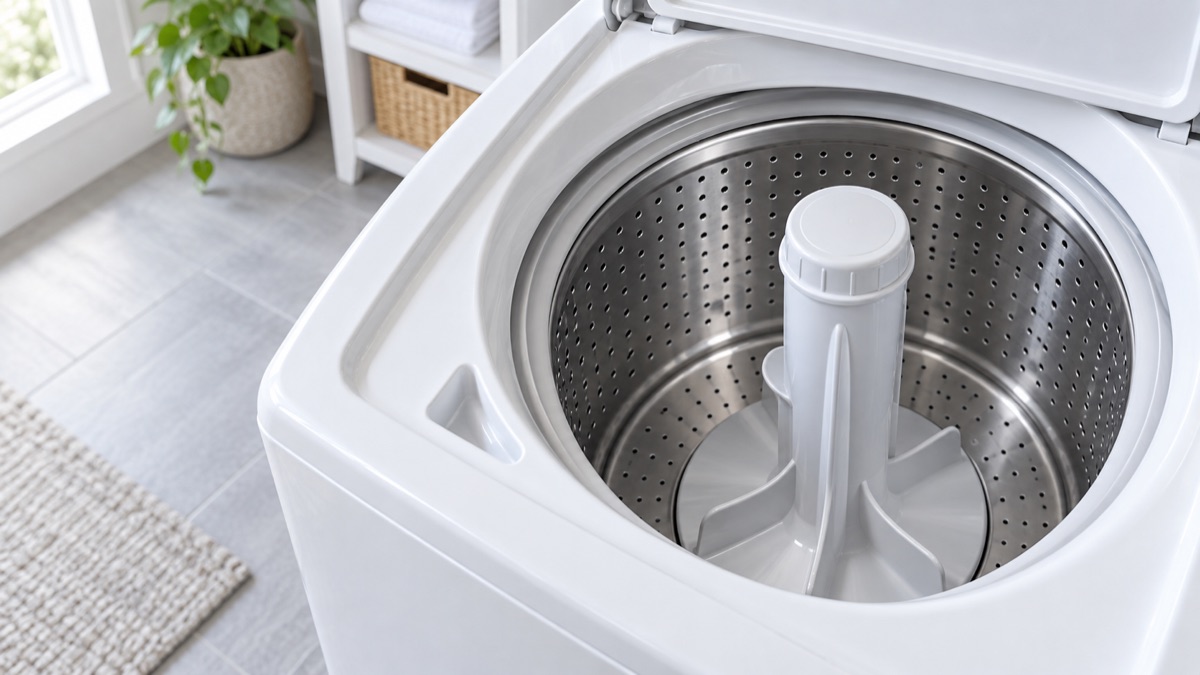
When a washer is not agitating, the load barely moves even though the machine runs. Often, the agitator parts, the motor coupling, or the transmission is worn. So check the agitator first. Then, move to the belt, motor, and controls.
Parts to inspect for a washer not agitating problem
1. Agitator
The agitator is the finned column that turns back and forth to move clothes through the water. When its splines wear or it cracks, the load barely moves even though the motor runs. So watch the agitator during a wash and see if it turns with force. Replace it if it is split or no longer grips the drive.
2. Agitator Directional Cogs
The directional cogs let the agitator drive one way and ratchet back the other. When the cogs wear down, the agitator moves weakly or not at all. So inspect the cogs for rounded or broken teeth. Replace them as a set to restore full agitation.
3. Agitator Coupler & Cap & Bolt
This coupler, cap, and bolt lock the agitator to the drive shaft. When they strip or loosen, the agitator slips and stops turning the load. Therefore, check the cap and bolt for a tight fit and the coupler for worn teeth. Replace the set if any part is stripped.
4. Direct Drive Motor Coupling
The motor coupling connects the motor to the transmission on direct-drive washers. When it wears, the motor runs but the tub will not agitate or spin. Therefore, remove the motor and check the coupling for cracked or stripped drive lugs. Replace the coupling if it is worn.
5. Drive Belt
The drive belt links the motor to the transmission or tub. When it stretches, glazes, or snaps, the washer will not agitate or spin. First, check the belt for cracks and proper tension. Then replace the belt if it is worn or broken.
6. Transmission
The transmission turns the motor’s spin into agitation and drive. When its gears wear, the washer agitates weakly or leaks oil. So check for weak agitation and oil under the tub. Replace or rebuild the transmission if it is worn.
7. Drive Motor
The drive motor powers agitation and spin. When a winding fails or the motor overheats, it may hum, trip, or stop. Therefore, check that the shaft turns freely and test the windings. Replace the motor if it is open or seized.
8. Timer
The timer steps the washer through fill, wash, drain, and spin. When it sticks, a step never starts or the cycle stalls. So confirm the timer advances and powers each stage. Replace the timer if it stops.
9. Lid Switch
The lid switch tells the control the lid is closed so the washer can spin. When it fails, the washer fills and agitates but will not spin or drain. Therefore, test the switch for continuity as the lid closes. Replace it if it does not click or make contact.
10. Selector Switch
The selector switch sends your cycle choice to the control. When its contacts fail, a setting may do nothing. So test the switch for continuity in each position. Replace it if a position does not make contact.
11. Water Level Switch
The water level switch senses how full the tub is and shuts the valve at the set level. When it fails, the washer overfills or never fills enough. So check the switch and its air tube. Replace the switch if it does not trip.
Get the parts
We supply OEM and replacement parts in bulk. Browse the Appliance Parts catalog, or request a bulk quote for volume orders.
Is the unit old or failing often? A new ENERGY STAR certified washer can cut water and energy use, so weigh a repair against a replacement.
Most of the time, a washer not agitating problem traces back to one worn part. So replace it, then run a short cycle and confirm the fix.