Dishwasher Not Draining? Causes, Checks & Parts to Replace
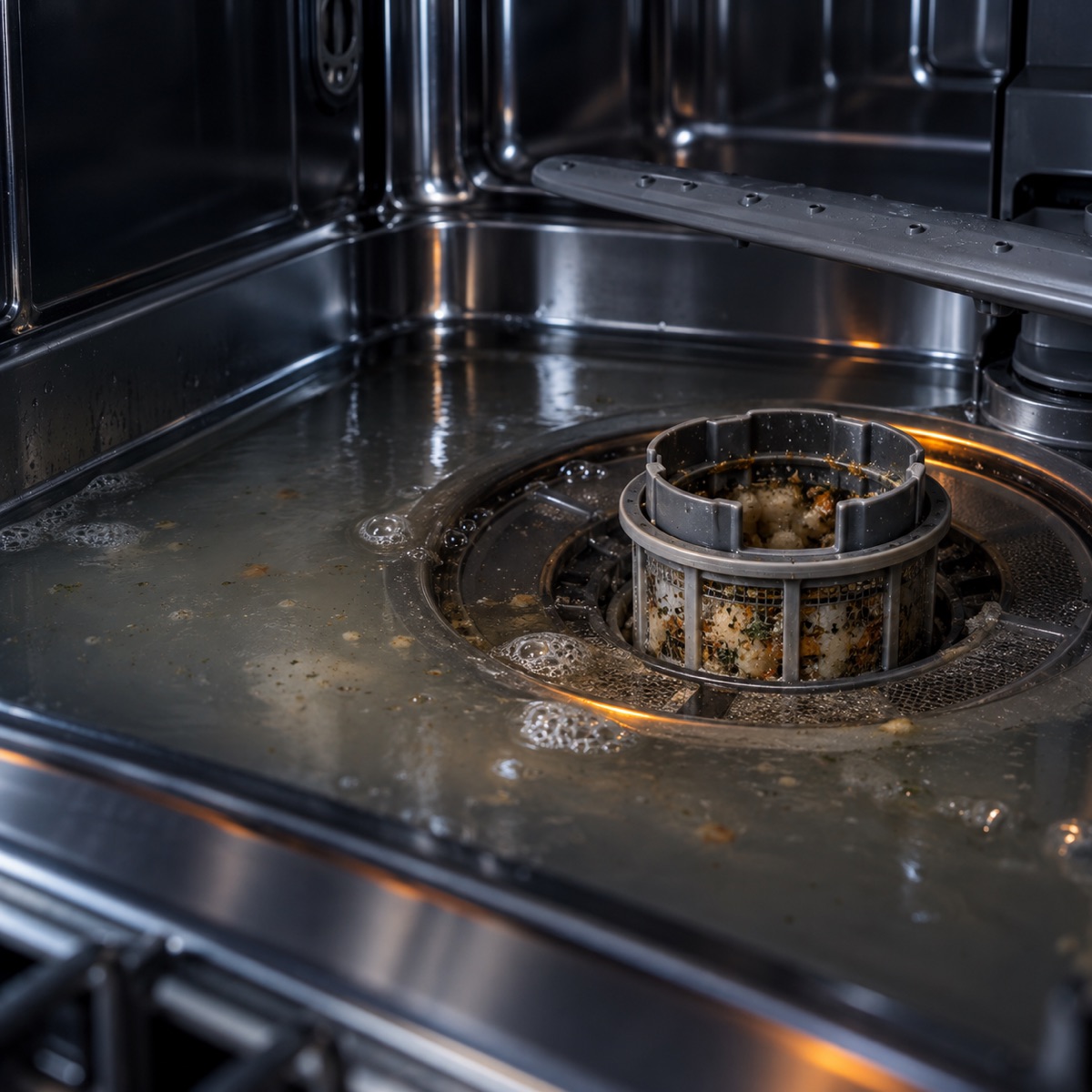
When a dishwasher is not draining, water sits in the bottom after the cycle. Usually, the cause is a blockage or a failed drain part. Below, we list the parts to check in order. Start with the easy checks first. Then, move to the pump if the problem remains.
Parts to inspect for a dishwasher not draining problem
1. Piston & Nut Assembly
This valve assembly directs water between wash and drain. When it jams, drainage fails. Therefore, inspect it for buildup and free travel. Clean or replace it as needed.
2. Drain Pump & Motor
The drain pump pushes used water out to the drain line. If the motor fails, the water stays in the tub. Also, listen for a hum without flow, which often means a seized pump. A pump that fails to run needs a replacement.
3. Check Valve Flapper
The check valve stops drained water from flowing back into the tub. When it sticks, drainage slows or reverses. So inspect the flapper for debris and free movement. Replace it if it no longer seats.
4. Belt
Some older models use a belt to drive the pump. A worn or broken belt stops the pump from turning. So inspect the belt for cracks and slack. Replace it if it is glazed or split.
5. Timer
The timer advances the cycle and powers each part in turn. When it fails, a step never starts. So confirm the timer advances and sends power on schedule. Replace the timer if it stalls.
6. Drain Hose
The drain hose carries water out to the sink drain or disposer. Food and grease can clog it over time. First, check the hose for kinks and blockages. Then clear any debris and confirm the line runs without a trap.
Get the parts
We supply OEM and replacement parts in bulk. Browse the Appliance Parts catalog, or request a bulk quote for volume orders.
Is the unit old or failing often? A new ENERGY STAR certified dishwasher can cut water and energy use, so weigh a repair against a replacement.
Most of the time, a dishwasher not draining traces back to one worn part. So replace it, then run a short cycle to confirm the fix.