Dishwasher Leaking? Find the Source and Fix It
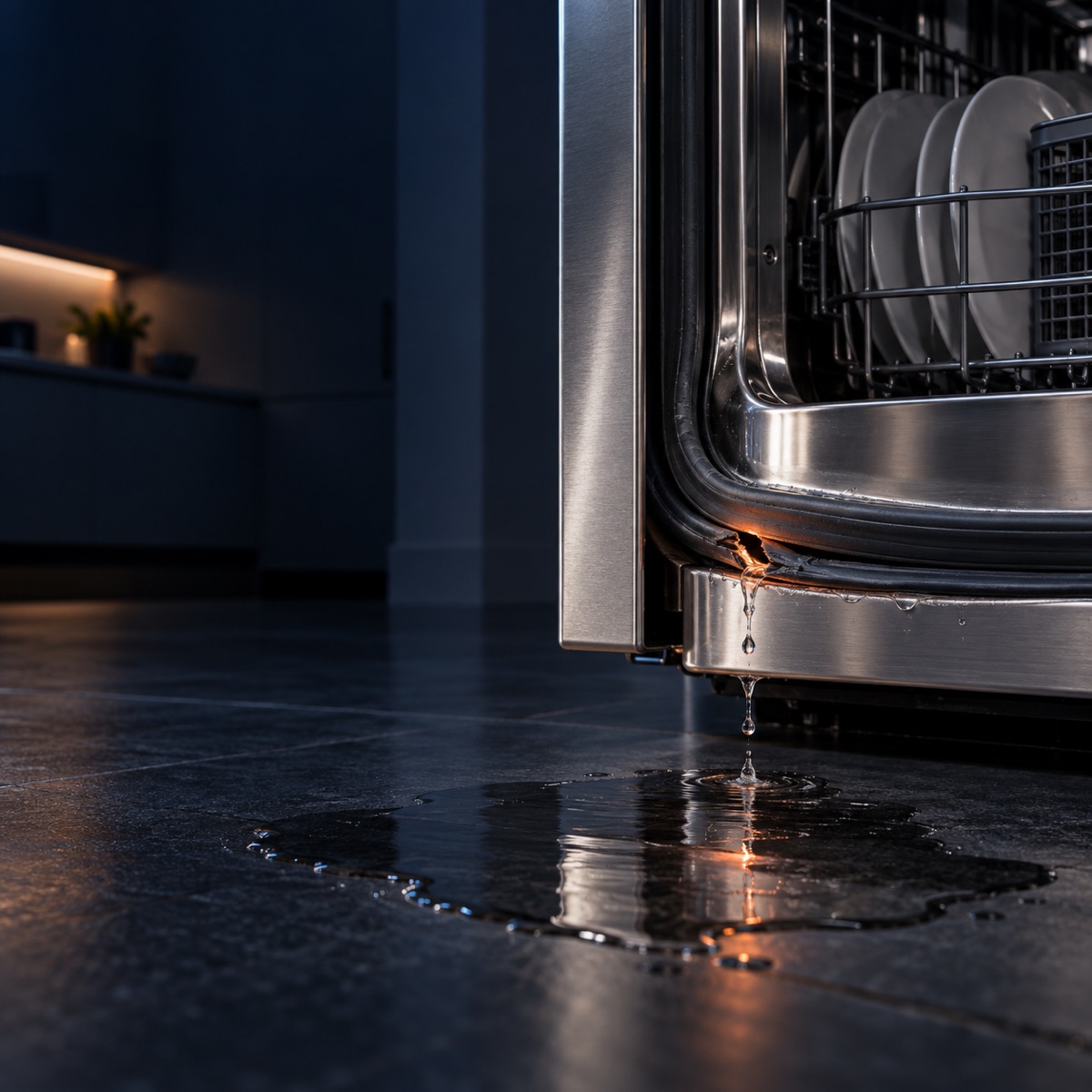
A dishwasher leaking onto the floor points to a seal, hose, or valve. Water most often escapes at the door or under the tub. Therefore, check each water path in turn. Below, we list the parts to inspect, starting with the door.
Parts to inspect for a dishwasher leaking problem
1. Pump
The pump moves water through the machine. When it seizes or leaks, you may see water on the floor or a stalled cycle. Therefore, check the pump housing and seals for cracks and debris. Replace the pump if it leaks or no longer turns freely.
2. Door Gasket
The door gasket seals the gap around the door. Over time, it hardens or tears and lets water escape. First, run a finger around the seal to feel for gaps. Then replace the gasket if it is brittle, flattened, or split.
3. Water Inlet Valve
The inlet valve controls water entering the dishwasher. When it sticks open, it can overfill and leak; when it sticks closed, the tub never fills. Therefore, check the valve for leaks and proper shut-off. Replace it if it drips or does not open.
4. Dispensers & Grommets
The dispenser releases detergent during the cycle, and its grommets seal the door. If a grommet fails, water leaks at the door. So inspect the dispenser body and grommets for cracks. Replace worn seals and a cracked dispenser.
5. Spray Arm
The spray arm sprays water onto the dishes. Clogged nozzles cut pressure and leave dishes dirty. First, remove the arm and rinse the holes clear. Then confirm it spins freely, and replace it if it is cracked.
6. Float & Float Switch
The float rises with the water level, and the switch stops the fill at the right point. If the float sticks, the tub can overfill and leak. So check that the float moves freely, and test the switch. Replace the switch if it does not trip.
7. Hose Clamps & Hoses
Hoses carry water in and out, and clamps hold each joint tight. A loose clamp or split hose leaks under the unit. Therefore, check every clamp and hose for drips and cracks. Tighten loose clamps, and replace any hose that leaks.
Get the parts
We supply OEM and replacement parts in bulk. Browse the Appliance Parts catalog, or request a bulk quote for volume orders.
Is the unit old or failing often? A new ENERGY STAR certified dishwasher can cut water and energy use, so weigh a repair against a replacement.
Most of the time, a dishwasher leaking traces back to one worn part. So replace it, then run a short cycle to confirm the fix.