Dishwasher Not Turning On? How to Find the Cause
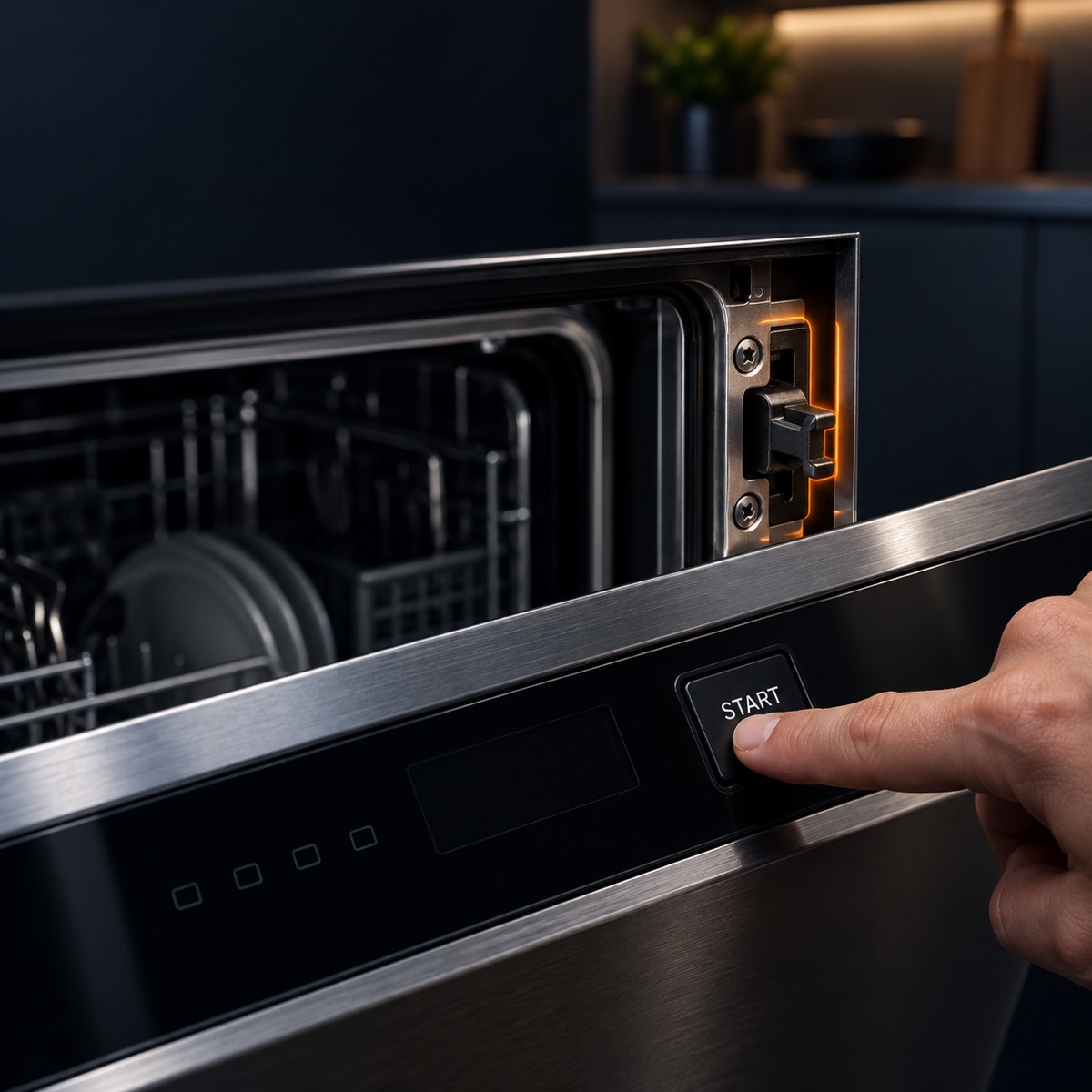
When a dishwasher is not turning on, the door, a switch, or the control is usually to blame. First, confirm the door latches fully. Then, work through the switches and the control step by step. Below, we list the parts to check.
Parts to inspect for a dishwasher not turning on problem
1. Door Latch Or Door Latch Switch
The latch confirms the door is closed before the dishwasher runs. When the switch fails, the unit stays dead. So test the switch for continuity, and check that the catch still engages firmly. Replace the latch if it no longer holds or reads correctly.
2. Timer Or Electronic Control
The timer or electronic control runs the cycle and powers each stage. If it fails, the dishwasher may not start at all. Therefore, check that the control advances and responds to buttons. Replace the control if it does not react.
3. Selector Switch
The selector switch sends your cycle choice to the control. A faulty switch can block start. So test the switch contacts for continuity. Replace it if a position reads dead.
4. Motor Start Relay
The start relay gives the motor the boost it needs to start. When it fails, the motor hums but will not turn. Therefore, test the relay for continuity. Replace it if it is open or shorted.
5. Thermal Fuse
The thermal fuse cuts power if the control board overheats. Once it blows, the dishwasher goes dead. So test the fuse for continuity. Replace a blown fuse, and check why it tripped.
6. Drive Motor
The drive motor powers the wash pump. A failed motor stops the wash and may hum. So check the motor for a free-spinning shaft and test its windings. Replace the motor if it is seized or open.
Get the parts
We supply OEM and replacement parts in bulk. Browse the Appliance Parts catalog, or request a bulk quote for volume orders.
Is the unit old or failing often? A new ENERGY STAR certified dishwasher can cut water and energy use, so weigh a repair against a replacement.
Most of the time, a dishwasher not turning on traces back to one worn part. So replace it, then run a short cycle to confirm the fix.