Oven Door Locked After a Self-Clean Cycle? How to Release It
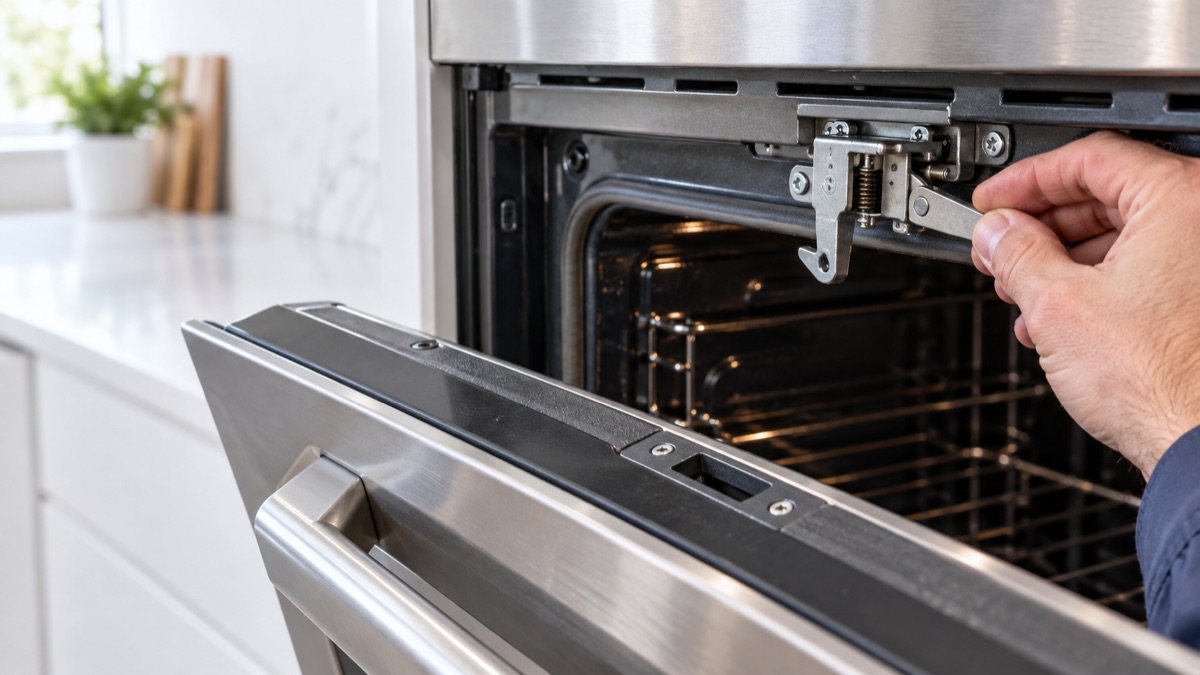
When an oven door is locked after a self clean cycle, the latch will not release even though the oven has finished. Usually, a hot sensor reading or a stuck lock motor keeps the door shut. First, let the oven cool fully, since the latch holds until it is safe. Then, check the sensor and lock motor below.
Parts to inspect for an oven door locked after a self clean cycle
1. Oven Temperature Sensor
After a self clean, a sensor that reads hot keeps the lock engaged. The oven temperature sensor reports the cavity temperature to the control so it can hold the set heat. When it drifts or fails, the oven runs cold, runs hot, or throws an error. So measure the sensor resistance, which should read near 1080 ohms at room temperature. Replace the sensor if the reading is off or open.
2. Door Lock Switch & Motor Assembly
The door lock motor drives the latch that locks the oven door during a self clean cycle. When the motor or its switch sticks, the door stays locked after the oven cools. Therefore, let the oven cool fully, then check the motor and switch for power and movement. Replace the assembly if the latch will not release.
Let the oven cool and reset power
Before you take the panel off, give the lock a chance to release. First, let the oven cool all the way. The latch stays locked until the cavity drops below a safe temperature. Then, turn the range off at the breaker for a minute and back on to reset the control. Often, a full cool-down and a reset free the door without any parts.
Get the parts
We supply OEM and replacement parts in bulk. Browse the Appliance Parts catalog, or request a bulk quote for volume orders.
Is the range old or failing often? So weigh a repair against a new unit, and browse complete ranges and ovens when a replacement makes more sense.
Most of the time, an oven door that stays locked after self clean traces back to one worn part. So replace it, then run a short test and confirm the fix.