Microwave Sparking Inside? Causes and Fixes
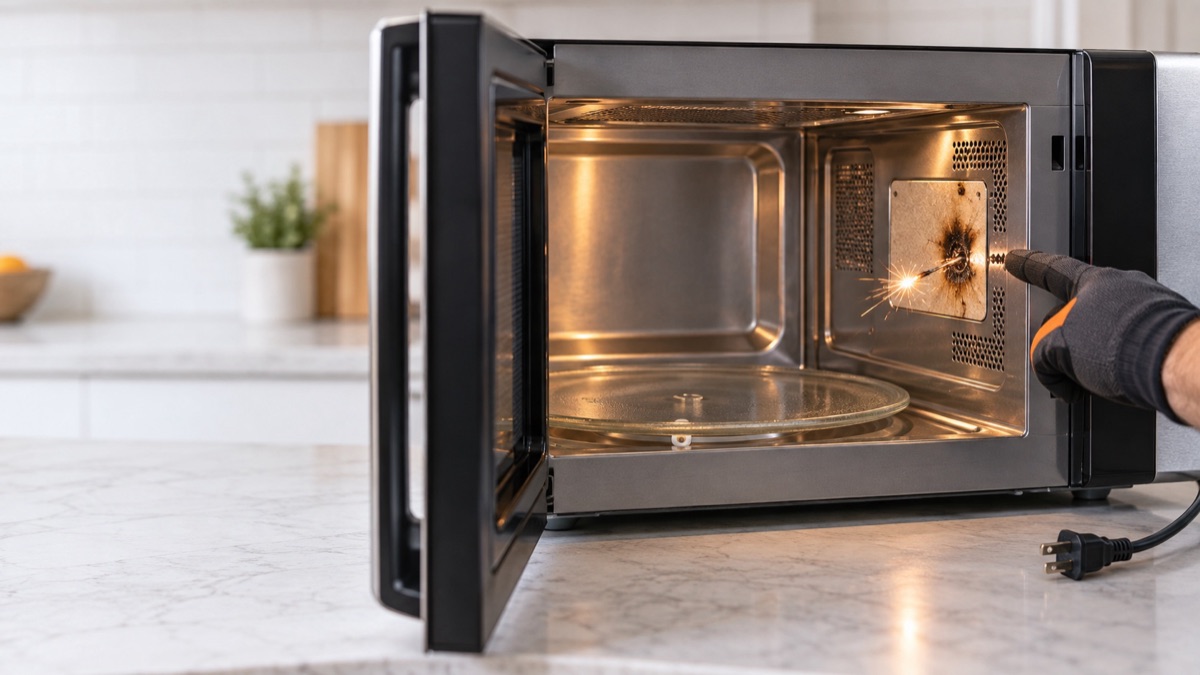
When a microwave is sparking inside, you see arcing during a cycle and may hear popping. Usually, a shorted high voltage diode, a dirty stirrer, or foil in the cavity is the cause. First, remove any metal and check the cavity. Then, work through the parts below.
Parts to inspect for a microwave that is sparking
1. High Voltage Diode
A shorted high voltage diode is a classic cause of loud arcing and sparking. The high voltage diode works with the capacitor to double the voltage that drives the magnetron. When it opens or shorts, the microwave runs but does not heat. A shorted diode often causes loud buzzing or arcing. Therefore, a qualified technician should discharge the capacitor and test the diode. A healthy diode blocks both ways on an ordinary meter, so it needs a tester with a nine volt battery in series, and then it conducts one way only. Replace the diode if it conducts both ways, stays open with that added voltage, or is blistered.
2. Stirrer
The stirrer is the rotating blade that spreads the microwave energy evenly through the cavity. When it stops turning or its cover gets dirty, energy concentrates and the unit can spark inside. Therefore, check that the stirrer turns freely and clean any food splatter around it. Replace the stirrer or its motor if it is seized or damaged.
Remove metal and clean the cavity first
Before you open the cabinet, rule out the simple causes. First, take out any foil, metal-trimmed dish, or the metal rack if the manual does not allow it. Then, clean food splatter off the waveguide cover and cavity walls, because burnt spots arc. Often, a clean cavity and no metal stop the sparking without any parts.
Get the parts
We supply OEM and replacement parts in bulk. Browse the Appliance Parts catalog, or request a bulk quote for volume orders.
Is the microwave old or failing often? So weigh a repair against a new unit, and browse complete microwaves and more when a replacement makes more sense.
Most of the time, a microwave that sparks inside traces back to one worn part. So replace it, then run a short test with a cup of water and confirm the fix.