Dishwasher Soap Not Dissolving? Fix the Detergent Dispenser
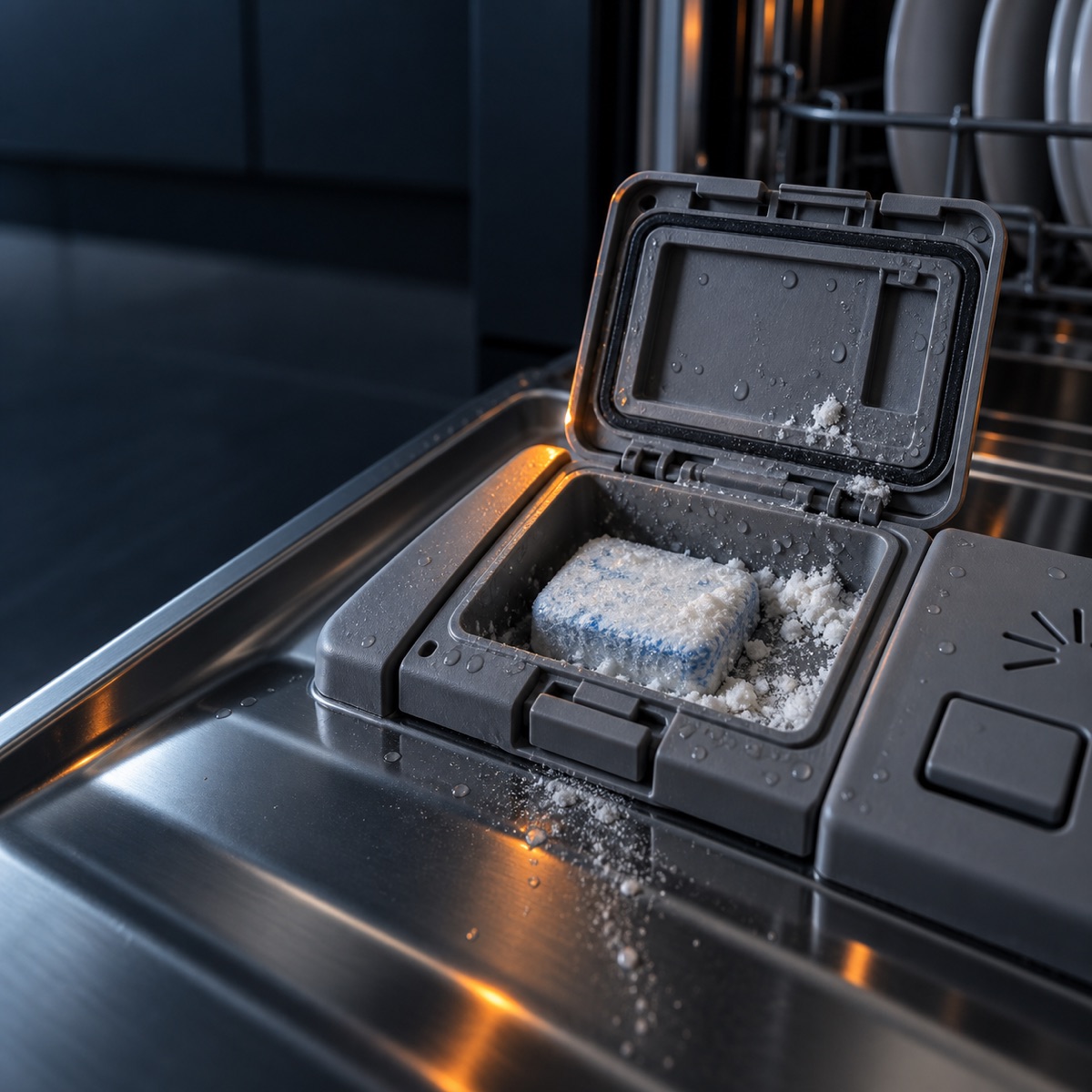
When dishwasher soap is not dissolving, the detergent door usually did not open. As a result, the tablet sits unused in the cup. So check the dispenser, spring, and actuator. Below, we list the parts to inspect.
Parts to inspect for a dishwasher soap not dissolving problem
1. Detergent & Rinse Aid Dispensers
These dispensers release detergent and rinse aid on cue. If either sticks, dishes come out dirty or spotted. So inspect both doors and springs for buildup. Clean the mechanism, and replace a dispenser that no longer opens.
2. Rinse Aid Cap
The rinse aid cap seals the reservoir. A loose or cracked cap lets rinse aid leak into the tub. So check that the cap seats and turns fully. Replace the cap if the seal is worn.
3. Door Spring & Hinge Pin
The door spring and hinge pin control how the door opens and holds. A weak spring lets the door drop and can block the dispenser. So check the spring tension and the pin for wear. Replace worn parts to restore smooth motion.
4. Wax Motor
The wax motor is a small actuator that releases the detergent door. When it fails, the door stays shut and detergent never dispenses. Therefore, test the wax motor for continuity. Replace it if it does not actuate.
5. Bi-Metal Release
The bi-metal release uses heat to trip the dispenser door open. A failed bi-metal keeps the door closed. So test it for continuity and correct operation. Replace it if it does not release.
6. Timer
The timer advances the cycle and powers each part in turn. When it fails, a step never starts. So confirm the timer advances and sends power on schedule. Replace the timer if it stalls.
Get the parts
We supply OEM and replacement parts in bulk. Browse the Appliance Parts catalog, or request a bulk quote for volume orders.
Is the unit old or failing often? A new ENERGY STAR certified dishwasher can cut water and energy use, so weigh a repair against a replacement.
Most of the time, a dishwasher soap not dissolving traces back to one worn part. So replace it, then run a short cycle to confirm the fix.