Dishwasher Not Drying Dishes? Fix the Heat & Rinse System
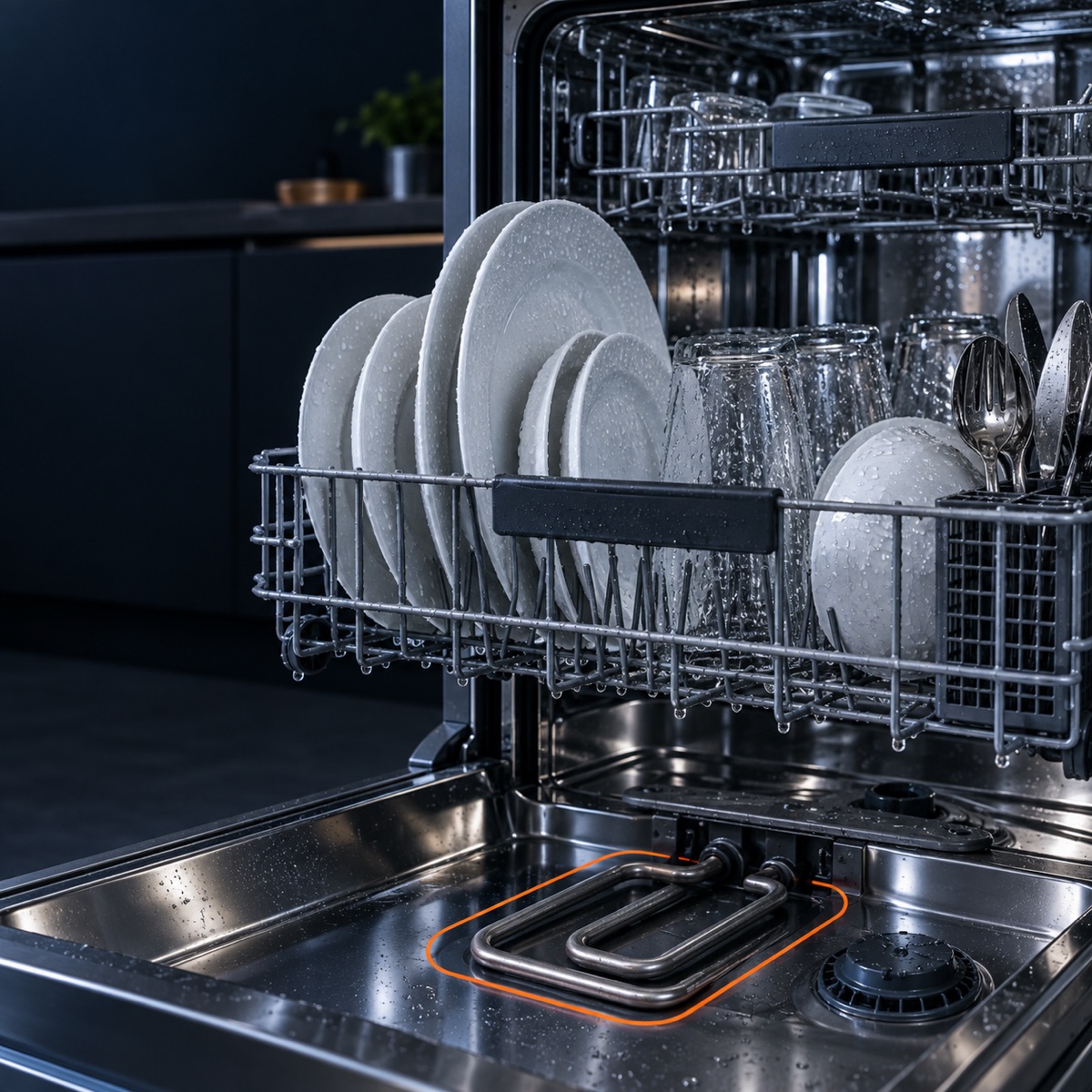
A dishwasher not drying leaves dishes wet at the end of the cycle. Usually, the heat system or the rinse aid is the cause. So check the element and thermostat first. Then, confirm the rinse aid still dispenses.
Parts to inspect for a dishwasher not drying problem
1. Heating Element
The heating element warms the water and helps dry the load. A burned-out element leaves dishes cool and wet. So inspect the element for breaks or blisters, then test it for continuity. Replace it if it fails the test.
2. High Limit Thermostat
The high-limit thermostat caps the drying temperature for safety. If it trips early or fails, drying suffers. Therefore, test the thermostat for continuity at room temperature. Replace it if it reads open.
3. Rinse Aid Dispenser
The rinse aid dispenser meters liquid that helps water sheet off dishes. When it clogs or leaks, drying gets worse. Therefore, check the cap seal and the dispenser for residue. Replace it if it leaks or will not release rinse aid.
Two quick checks before you open the unit
Before any teardown, rule out the simple causes. First, refill the rinse aid, since low rinse aid is a common reason dishes stay wet. Then, confirm the incoming water is hot enough, because cool water dries poorly. If both are fine, move on to the element and thermostat below.
Why heat matters for drying
Most dishwashers dry with residual heat from the final rinse. Therefore, a weak element or a tripped thermostat leaves the load damp. Rinse aid then helps the remaining water sheet off the dishes. When all three work together, dishes come out dry.
Get the parts
We supply OEM and replacement parts in bulk. Browse the Appliance Parts catalog, or request a bulk quote for volume orders.
Is the unit old or failing often? A new ENERGY STAR certified dishwasher can cut water and energy use, so weigh a repair against a replacement.
Most of the time, a dishwasher not drying traces back to one worn part. So replace it, then run a short cycle to confirm the fix.