Oven Not Heating When Baking? Causes and Fixes
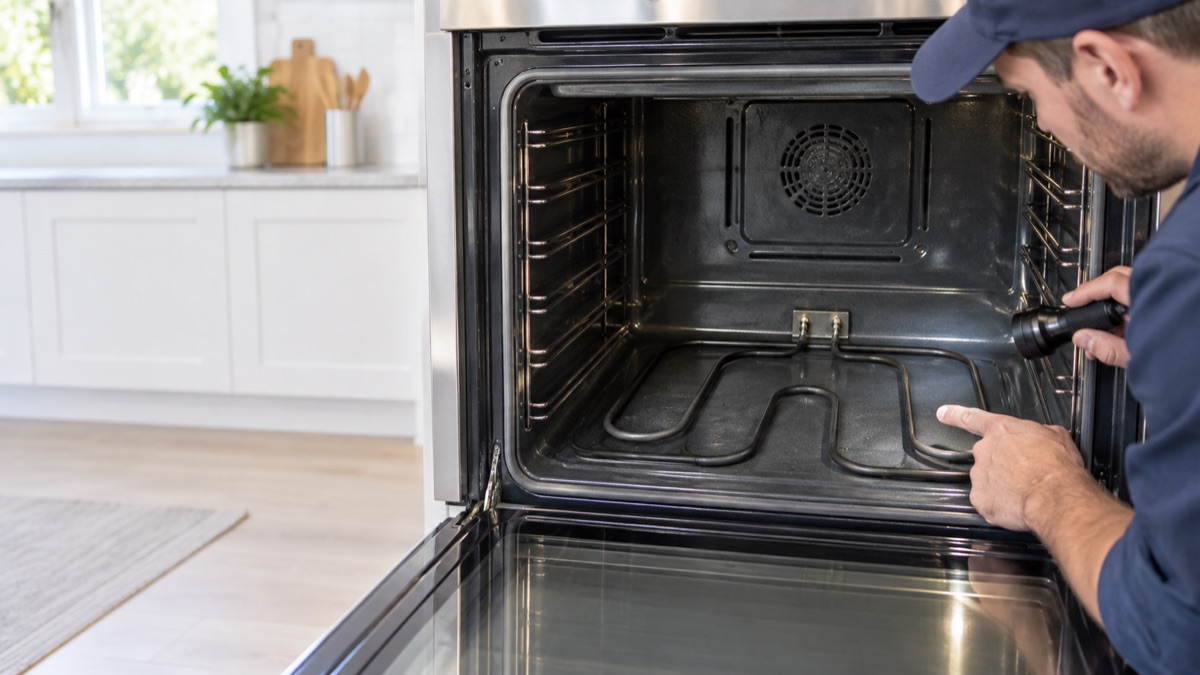
When an oven is not heating during a bake cycle, it stays cold or barely warms while the display looks normal. Usually, a burned bake element, a bad sensor, or a failed control is the cause. First, inspect the bake element for a break. Then, test the sensor, thermostat, and control below.
Parts to inspect for an oven that is not heating when baking
1. Bake Element
The bake element is the lower element that heats the oven for baking. When it burns out, you get little or no heat. The coil may also show a break or a blistered spot. Therefore, inspect the element for damage and test it for continuity. Replace the bake element if it is broken or reads open.
2. Oven Control Thermostat
On many older ovens, the control thermostat sets and holds the bake temperature by sensing heat directly. When it fails, the oven runs cold, runs hot, or will not keep the setting. So test the thermostat and check its calibration against an oven thermometer. Replace it if the temperature stays off after you recalibrate.
3. Oven Temperature Sensor
When baking stays cold, a sensor that reads high can cut the heat early. The oven temperature sensor reports the cavity temperature to the control so it can hold the set heat. When it drifts or fails, the oven runs cold, runs hot, or throws an error. So measure the sensor resistance, which should read near 1080 ohms at room temperature. Replace the sensor if the reading is off or open.
4. Electronic Control Board
If the element and sensor test good, look at the control that powers them. The electronic control board runs the oven, reads the sensor, and switches the elements or gas valve. When it fails, the oven may not heat, hold temperature, or respond to the pad. So look for burnt spots and relays that will not click, and confirm it powers each output. Replace the board if it no longer controls the oven.
5. Fuses
If the whole oven is dead on bake, check for a blown fuse first. A thermal fuse or line fuse cuts power to protect the range if a circuit overheats. When a fuse blows, part of the oven or the whole range goes dead. Therefore, test each fuse for continuity and find the fault that tripped it. Replace a blown fuse, but fix the cause first, or the new one will blow again.
Get the parts
We supply OEM and replacement parts in bulk. Browse the Appliance Parts catalog, or request a bulk quote for volume orders.
Is the range old or failing often? So weigh a repair against a new unit, and browse complete ranges and ovens when a replacement makes more sense.
Most of the time, an oven that is not heating when baking traces back to one worn part. So replace it, then run a short test and confirm the fix.