Washer Making a Loud Noise? Common Causes and Fixes
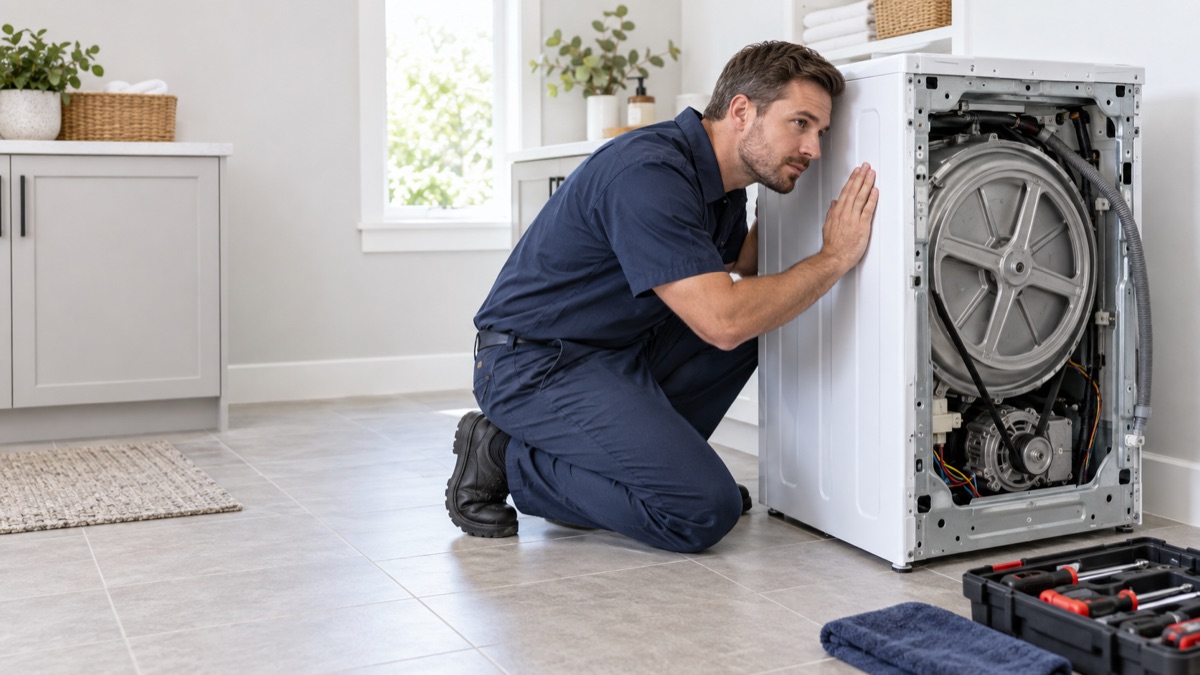
A washer making a loud noise usually points to a worn bearing, belt, or pump. A grind, squeal, or bang often means a part has failed. Therefore, locate the sound first, then inspect that part. Below, we list the parts to check.
Parts to inspect for a noisy washer
1. Pump & Pump Motor
The pump and its motor push water out during drain. When a bearing wears, the pump often grinds or hums. So run a drain and listen at the pump for noise. Replace the pump and motor if they are loud or seized.
2. Drive Belt
The drive belt links the motor to the transmission or tub. When it stretches, glazes, or snaps, the washer will not agitate or spin. First, check the belt for cracks and proper tension. Then replace the belt if it is worn or broken.
3. Direct Drive Motor Coupling
The motor coupling connects the motor to the transmission on direct-drive washers. When it wears, the motor runs but the tub will not agitate or spin. Therefore, remove the motor and check the coupling for cracked or stripped drive lugs. Replace the coupling if it is worn.
4. Shock Absorbers
The shock absorbers damp the tub so it does not bang during spin. When one wears or leaks, the washer shakes and moves. So check each absorber for oil and resistance. Replace worn absorbers as a set.
5. Tub Dampening Strap
The dampening straps hang the tub and soak up motion in some top-loaders. When a strap wears or unhooks, the washer bangs and shakes. So check each strap for wear and a secure hook. Replace a worn or detached strap.
6. Drive motor
The drive motor powers agitation and spin. When a winding fails or the motor overheats, it may hum, trip, or stop. Therefore, check that the shaft turns freely and test the windings. Replace the motor if it is open or seized.
7. Drive Motor Pulley &Transmission Pulley & Pump Pulley
These pulleys carry the belt between the motor, transmission, and pump. When a pulley bends or its bearing wears, you hear noise and lose drive. So spin each pulley and check for wobble or roughness. Replace any pulley that is bent or seized.
8. Pump Belt
On some models a belt drives the pump. When the belt slips or breaks, the washer will not drain. First, check the belt for wear and tension. Then replace the belt if it is glazed or cracked.
9. Tub Bearing
The tub bearing lets the inner tub spin smoothly. When it wears, the washer roars or grinds during spin. So spin the tub by hand and feel for roughness. Replace the bearing if it is noisy or rough.
10. Agitator Directional Cogs & Dogs
The cogs and dogs work together so the agitator grabs and releases on each stroke. When the dogs wear, you often hear a clicking noise and see weak agitation. Therefore, check the dogs and cogs for wear. Replace them together, since they wear as a pair.
11. Clutch Assembly
The clutch lets the tub come up to spin speed gradually. When the clutch lining wears, the tub spins slowly or not at all and may smell hot. So inspect the clutch lining for wear and burn marks. Replace the clutch assembly if the lining is worn.
Get the parts
We supply OEM and replacement parts in bulk. Browse the Appliance Parts catalog, or request a bulk quote for volume orders.
Is the unit old or failing often? A new ENERGY STAR certified washer can cut water and energy use, so weigh a repair against a replacement.
Most of the time, a noisy washer traces back to one worn part. So replace it, then run a short cycle and confirm the fix.