Washer Leaking Water? Find the Source and Fix It
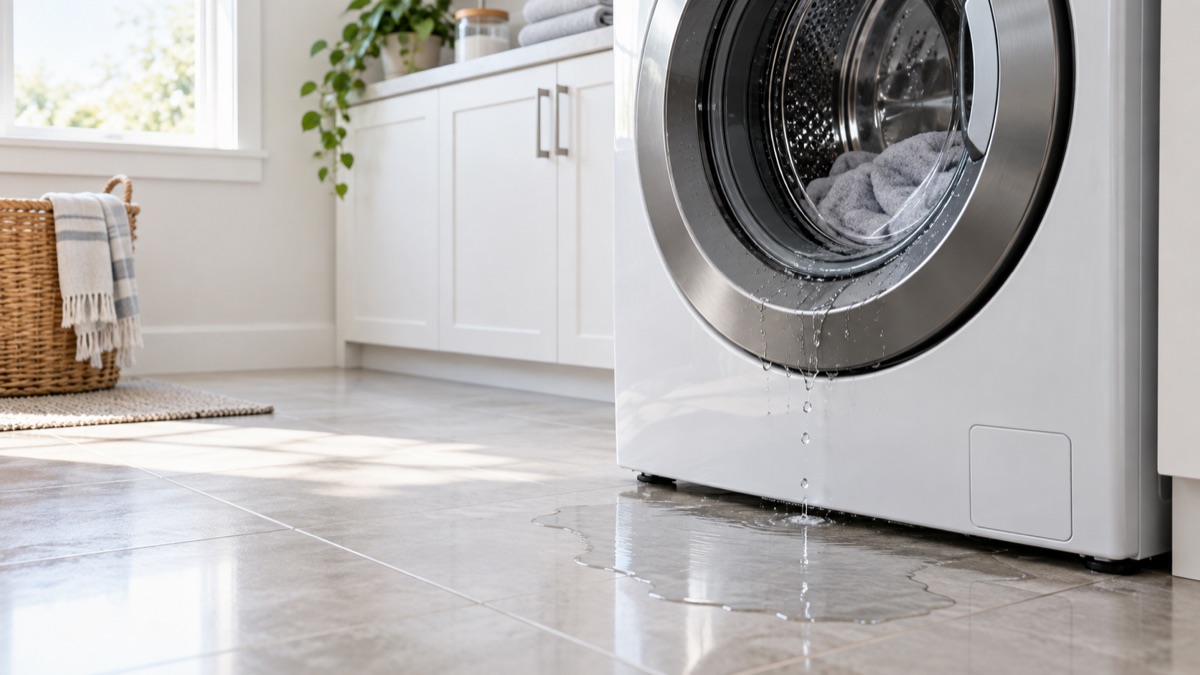
A washer leaking water leaves a puddle on the floor or under the tub. Most often, a hose, a seal, or the water valve is the source. Therefore, check each water path in turn. Below, we list the parts to inspect, starting with the hoses and seals.
Parts to inspect for a washer leaking water problem
1. Hoses
The fill and drain hoses carry water in and out of the washer. When a hose cracks, loosens, or clogs, water leaks or drainage slows. First, check each hose and clamp for drips and kinks. Then tighten a loose clamp or replace a split hose.
2. Pump
The pump moves water through the washer and out to drain. When it leaks, jams, or its motor fails, you see water on the floor or standing in the tub. So check the pump body and seals for cracks and debris. Replace the pump if it leaks or will not turn.
3. Tub Cover Gasket
The tub cover gasket seals the top of the outer tub. When it hardens or slips, water sprays out during the wash. First, check the gasket for cracks and a firm seat. Then replace it if it no longer seals.
4. Water Inlet Valve
The water inlet valve opens to let hot and cold water into the tub. When it clogs or its solenoid fails, the washer fills slowly, not at all, or will not stop. So check the valve screens and test the solenoids. Replace the valve if it is blocked or electrically dead.
5. Bellows Or Door Boot Seal
The door boot seal is the rubber gasket that seals a front-load door to the tub. When it tears or traps debris, water leaks from the door during a cycle. First, wipe the boot and check the folds for rips. Then replace the boot if it is cracked or no longer seals.
6. Water Level Switch Or Pressure Switch & Air Dome Tube
The level switch and its air tube sense how full the tub is. When the tube leaks or the switch fails, the washer overfills or leaks. Therefore, check the tube for cracks and test the switch. Replace the tube or switch if either fails.
7. Door Catch
The door catch holds the lid or door closed during a cycle. When it wears or breaks, the door pops open and the washer stops. So check that the catch latches firmly and lines up with the strike. Replace the catch if it no longer holds.
8. Tub Seal Or Boot Seal
The tub seal keeps water from leaking where the shaft or door meets the tub. When it wears, water drips under the machine. Therefore, look for water below the tub and check the seal. Replace the seal if it is worn or cracked.
Get the parts
We supply OEM and replacement parts in bulk. Browse the Appliance Parts catalog, or request a bulk quote for volume orders.
Is the unit old or failing often? A new ENERGY STAR certified washer can cut water and energy use, so weigh a repair against a replacement.
Most of the time, a washer leaking water problem traces back to one worn part. So replace it, then run a short cycle and confirm the fix.